


This blog post is written by Shelley Loving, CNE, CPC, INHC. Shelley is a certified nutrition chef and the author of the best-selling anti-inflammatory cookbook, What’s On Your Fork?! When Shelley’s husband was 41 years old, he had a heart attack that led Shelley to begin taking control of what she could—what her family put on their plates. She has spent the last 12 years learning, discovering, and teaching about the benefits of anti-inflammatory eating for overall health and longevity.
The ideas, themes, and experiences in this blog post are Shelley’s. This post is not meant as medical or nutrition advice, and NBCF does not endorse any brands mentioned within. Always talk to your care team before incorporating any changes in your diet.
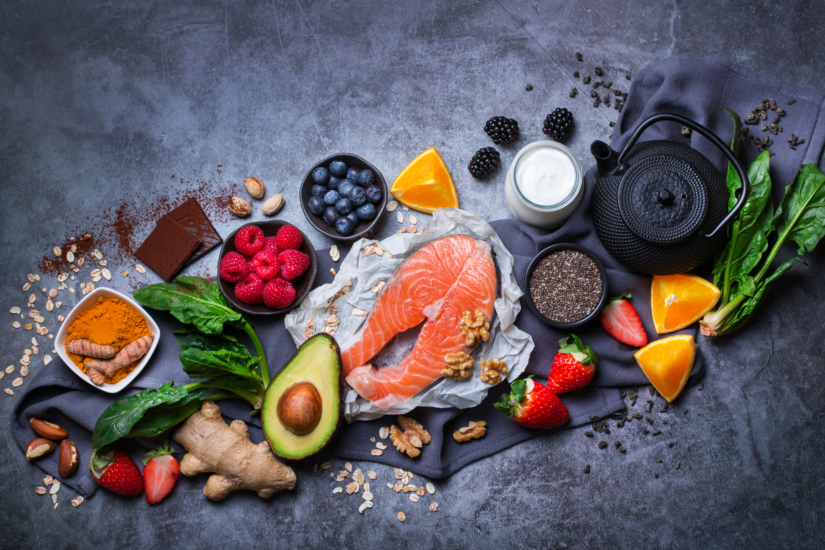
That’s it. That’s the whole foundation: Real food can reverse inflammation. And it matters more for breast cancer patients and survivors than almost any other group of women I know.
A dear client of mine—a breast cancer survivor whose own journey brought her deep into the world of anti-inflammatory eating—introduced me to National Breast Cancer Foundation. Her story and mine aligned in a way that felt like more than coincidence. She had lived what I teach. And she wanted more women to know about it.
So here I am. Pulling up a chair. And sharing what nobody told me back then—so you don’t have to figure it out the hard way.
First, let’s talk about inflammation—because not all of it is the enemy. There are two kinds of inflammation, and they could not be more different.
Acute inflammation is the good kind. It’s your body’s built-in first responder. You cut your finger, your immune system shows up, you heal. Thank you, acute inflammation. We need you.
Chronic inflammation is a different story entirely. This is the silent one. The slow burn. It doesn’t announce itself. There’s no obvious wound for your immune system to repair, so instead it keeps firing—week after week, month after month—quietly damaging healthy cells and creating an environment in the body where disease can take root.
Research has linked chronic inflammation to the progression and recurrence of breast cancer. Studies show that elevated levels of inflammatory markers in the body are associated with poorer outcomes for breast cancer survivors.
We can’t control every factor that contributes to chronic inflammation. But here’s what we CAN do: we can be intentional about the food we consume. Because what you eat every single day is either turning that fire down—or turning it up.
Here’s the thing I want you to sit with for a moment.
Before I went to nutrition school, I wasn’t buying all junk food. I was buying what looked like a completely normal, reasonable kitchen. Vegetable broth. Salad dressing. Cooking spray. Crackers. Jarred pasta sauce. Flavored nuts. Granola bars. The same things I’d been grabbing without thinking for years. And even after Neil’s heart attack—when I thought I was finally doing it right—I was still missing it in a big way.
What I didn’t know was that many of those “normal” staples were quietly feeding inflammation every time I used them. Not because I was eating badly. Because I wasn’t reading labels. Because nobody had told me what to look for.
That’s the pantry audit I want to walk you through. Not an overhaul. Not a throw-everything-out moment. Just awareness—and a few intentional swaps that add up to something real.
Cooking oils are one of the most used ingredients in any kitchen, and one of the most misunderstood. Not all oils are created equal—and knowing which to use, and how, is one of the biggest game-changers I teach.
Here’s what to know:
Store-bought sauces, dressings, and condiments are where hidden inflammation lives. The ranch dressing you’ve been buying? Flip it over. You’ll likely find soybean oil as the first or second ingredient, followed by sugar, modified starches, and a list of additives you’d never cook with at home.
My simple rule: look at the first five ingredients on any label. If an inflammatory ingredient—a refined oil, added sugar, or something you can’t pronounce—is anywhere in those first five, put it back and find another brand. The first five ingredients make up the bulk of what you’re actually eating. Everything after that is a smaller and smaller percentage. Start there.
Look for dressings and condiments made with avocado oil or olive oil as the base—or better yet, make your own. There’s a recipe at the end of this post that will completely change the way you think about ranch dressing.
Turmeric. Ginger. Garlic. Cinnamon. Black pepper. These aren’t exotic ingredients you use once a year. These are everyday, affordable pantry staples that happen to have some of the most well-documented anti-inflammatory properties in the food world.
A study on breast cancer survivors found that those who increased their use of herbs and spices—including cinnamon, turmeric, garlic, ginger, black pepper, and rosemary—showed the most meaningful improvements in their anti-inflammatory dietary patterns.
Add turmeric to your scrambled eggs. Grate fresh ginger into your tea. Roast your vegetables with garlic and black pepper. These are not dramatic gestures. They are small, consistent habits that accumulate into something powerful over time.
Gluten is a protein found in three specific grains: wheat, barley, and rye. That’s it. Everything else—rice, quinoa, oats labeled gluten-free, corn, potatoes—is naturally gluten-free.
Here’s why this matters: wheat, barley, and rye are among the most heavily sprayed crops in conventional agriculture. Glyphosate—one of the most widely used herbicides in the world, and one that has attracted growing scientific concern—is routinely applied to these crops, and residues have been detected in a wide range of grain-based foods.
I’m not here to tell you gluten is evil. For many people, it’s not a problem. But if you’re looking to reduce your body’s inflammatory load—and you’re eating bread, pasta, crackers, or cereals made from conventional wheat daily—it’s worth being aware of what may be coming along for the ride.
A practical starting point: where you can, choose certified organic versions of wheat-based products, or explore swapping some of your everyday staples for gluten-free whole grain alternatives like quinoa, certified gluten-free oats, or rice. One swap at a time.
I will never stand in front of you and say “do not eat ____.” That’s not my style, and honestly, it’s not how lasting change works.
What I know—after twelve years of living this and eight years of teaching it—is that extreme steps lead to burnout. Overhauling everything leads to food boredom. Strict rules lead to the restart cycle, and if there’s anything I want to spare you from, it’s that.
What works is this: slow and steady. Start by becoming aware of the habitual repeat foods you buy without thinking. The bottle of dressing you’ve grabbed for ten years. The cooking spray you’ve never flipped over. The crackers that “look healthy” on the front of the package.
Awareness first. One swap at a time. Small shifts—not a diet overhaul.
I promise you: those small shifts add up to big results. And they’re the kind that actually stick.
Browse and download all of NBCF’s cookbooks that focus on making it easier to prepare (and enjoy!) healthy meals. Plus, each cookbook is dietitian-approved.
I want to show you what a pantry swap looks like in real life. Not in theory. On your counter, in your blender, in five minutes.
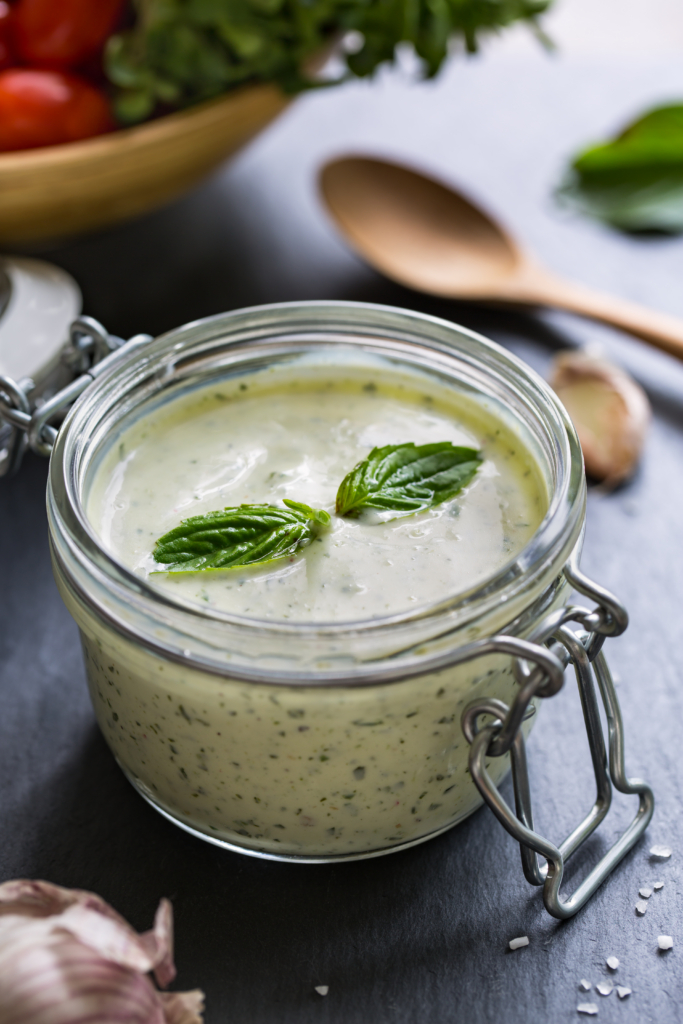
Ranch dressing is one of the most common condiments in American kitchens — and one of the most quietly inflammatory. A conventional bottle typically lists soybean oil as its primary fat, alongside sugar, MSG, and a lineup of additives you wouldn’t choose to cook with yourself.
This version? Cashews, full-fat coconut milk, avocado oil, fresh herbs, lemon. That’s the whole foundation. It takes five minutes, it goes on everything, and every time I teach it, women cannot believe it tastes this good.
This recipe is inspired by the condiment section of my cookbook, What’s On Your Fork?!—because if we’re making swaps, we might as well make them taste incredible.
Makes 8 servings | Ready in 5 minutes (plus soak/chill time)
Ingredients
Directions
*Shortcut: You can use canned coconut cream instead of coconut milk. Let the unopened can sit undisturbed for 24 hours before opening. Do not shake it. Use only the cream from the top.
Whether you are in the middle of treatment, on the other side of it, or doing everything you can to make sure you never face this again—I want you to hear this:
You are not helpless in your own kitchen.
I have watched women find relief, comfort, and real results from this approach—not because it’s complicated, but because it’s consistent. It gives them freedom from the overwhelm of “what am I supposed to eat?” and replaces it with something much better: confidence. And a kitchen that’s actually working for them.
My client who introduced me to this community? She found her way to anti-inflammatory eating as part of her own healing. And she wanted more women in this space to know that food isn’t just nourishment—it’s information. Every single meal is a message you’re sending your body.
Don’t complicate it. Don’t overhaul everything at once. Don’t go on a strict diet.
Start small. Slowly replace your staples with ones that support lowering inflammation. One bottle, one oil, one spice at a time.
Slow and steady is where success lives.
You’ve got this. And your kitchen is ready when you are.
Sources
1. Wang K, et al. Long-term anti-inflammatory diet in relation to improved breast cancer prognosis: a prospective cohort study. NPJ Breast Cancer. 2020;6:36. doi:10.1038/s41523-020-00179-4
2. Zheng J, et al. Association between dietary inflammatory potential and mortality after cancer diagnosis in the Women’s Health Initiative. British Journal of Cancer. 2023;128(4):606–617. doi:10.1038/s41416-022-02079-9
3. Castro-Espin C, et al. Dietary patterns related to biological mechanisms and survival after breast cancer diagnosis. British Journal of Cancer. 2023. doi:10.1038/s41416-023-02169-2
4. Long Parma DA, et al. Effect of an anti-inflammatory dietary intervention on quality of life among breast cancer survivors. Support Care Cancer. 2022;30(7):5903–5910. doi:10.1007/s00520-022-07023-4
5. Demark-Wahnefried W, et al. Dietary intervention among breast cancer survivors increased adherence to a Mediterranean-style, anti-inflammatory dietary pattern: The Rx for Better Breast Health Randomized Controlled Trial. PMC. doi:10.1093/jnci/djy002
6. Sparano JA, et al. Inflammatory cytokines and distant recurrence in HER2-negative early breast cancer. NPJ Breast Cancer. 2022;8:16. doi:10.1038/s41523-021-00376-9
7. Pannu MK, Constantinou C. Inflammation, Nutrition, and Clinical Outcomes in Breast Cancer Survivors: A Narrative Review. Current Nutrition Reports. 2023;12(4):643–661. doi:10.1007/s13668-023-00495-8
8. Wu Y, Yi J, Zhang Q. Analysis of dietary inflammatory potential and mortality in cancer survivors using NHANES data. Frontiers in Nutrition. 2024;11. doi:10.3389/fnut.2024.1467259
9. MD Anderson Cancer Center. Is seed oil healthy? cancerwise.mdanderson.org. Accessed 2024.
10. International Agency for Research on Cancer (IARC). Glyphosate classified as probable human carcinogen. IARC Monographs Vol. 112. 2015. iarc.fr
11. Muñoz JP, et al. Glyphosate and the key characteristics of an endocrine disruptor: A review. Environ Res. 2023;231:116201. doi:10.1016/j.envres.2023.116201
12. National Cancer Institute. Glyphosate exposure and urinary oxidative stress biomarkers in the Agricultural Health Study. JNCI. 2023. dceg.cancer.gov
National Breast Cancer Foundation is here for you as you navigate a breast cancer diagnosis. Visit our website to learn about NBCF breast cancer support groups, obtain free educational resources, or find a patient navigator in your area.
Donations are always appreciated, but there are lots of great ways to get involved.