


Breast Cyst


What is a breast cyst?
A breast cyst is a fluid-filled sac inside the breast that is usually benign (non-cancerous). A breast cyst can be very small (microcyst) or can be large enough to be felt in the breast tissue (macrocyst). If a cyst is large enough to be felt, it may feel like a lump, be relatively soft in texture, and is often compared to a grape under the skin.
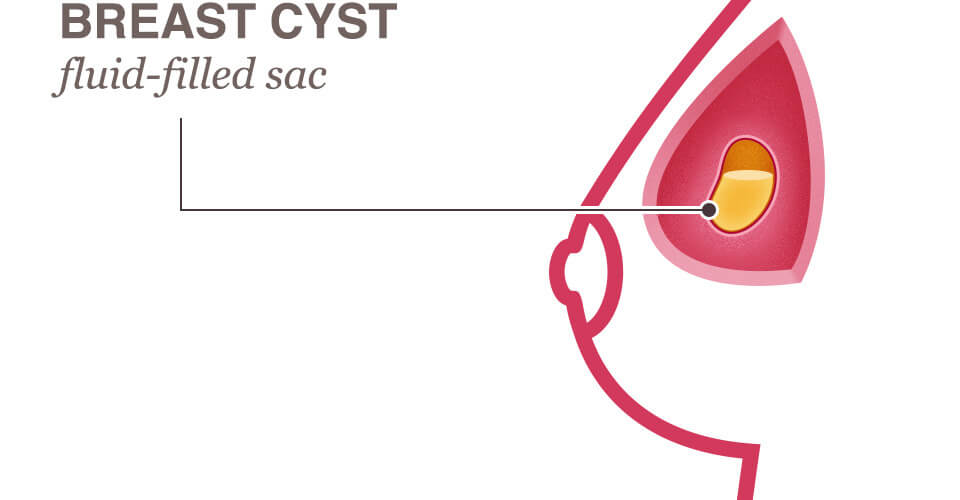
Only one cyst may appear, or many cysts may appear together. Cysts can appear in one or both breasts. Having a breast cyst or multiple breast cysts does not increase your chances of developing breast cancer.
Key highlights
- Most breast cysts are benign (non-cancerous), but all lumps or abnormalities in the breast tissue should be evaluated by a healthcare professional.
- There are different types of breast cysts: simple cysts, complicated cysts, and complex cysts.
- Most breast cysts do not require treatment and may even go away on their own.
- Professional imaging, such as a mammogram and ultrasound, and other testing is required to determine if a breast lump is a cyst or something else.
Jump to:
Types of breast cysts
How common are breast cysts?
What causes breast cysts?
Breast cyst symptoms
Breast cyst diagnosis
Breast cyst treatment & management
Breast cyst FAQs
Types of breast cysts
There are different types of breast cysts, each with its own characteristics. Types of breast cysts include:
Simple breast cyst
Simple cysts are the most common type of breast cyst, accounting for 90% of all breast cysts. They are generally benign, with a near-zero chance of being malignant (cancerous). Simple cysts are sacs in the breast that are filled with clear fluid and generally require no treatment unless painful.
A simple cyst may appear on a mammogram as a dark, round, or oval mass with smooth walls and clearly defined borders.
Complicated breast cyst
Complicated breast cysts are fluid-filled, but the fluid may be cloudy rather than clear. On a mammogram, a complicated breast cyst may appear as a cloudy mass with somewhat irregular borders.
Complicated cysts fall between simple cysts and complex cysts in terms of appearance and breast cancer risk, with a small chance (less than 2%) of complicated cysts being cancerous. Complicated cysts are sometimes biopsied (needle biopsy) with the tissue sent for analysis. If the biopsy is clear, your provider may recommend a follow-up mammogram or exam in 6 months.
Complex breast cyst
Complex breast cysts are a mixture of fluid and solid components and carry a higher risk of malignancy (cancer) than simple or complicated cysts. Up to 20% of complex breast cysts may be cancerous.
On a mammogram, a complex cyst may show thin walls or internal separations with irregular borders, and may show internal vascularity (the presence of blood vessels) within the cyst. Your provider will likely perform a biopsy on the cyst, which is sent to a lab for analysis. Depending on the biopsy results, your provider will advise you of the next steps.
How common are breast cysts?
Breast cysts are part of fibrocystic breast changes, which affect between 70-90% of women. Fibrocystic breast changes are noncancerous changes in the breast, often due to fluctuating hormones in the body, that can cause the breasts to feel lumpy or tender, especially during a woman’s menstrual cycle.
Breast cyst facts
- Approximately 7% of all women in the United States will develop a palpable breast cyst at some point in their life.
- Breast cysts may be found in one or both breasts.
- Breast cysts can occur at any age, but typically develop in women ages 30 to 50.
- Breast cysts are common in premenopausal women, with the incidence of cysts decreasing dramatically after menopause.
- Up to 25% of breast masses that are detected turn out to be cysts.
- Although very rare, men can also develop breast cysts.
Understanding Breast Cysts
It can be scary to find a lump in your breast. But most breast lumps are not breast cancer. Download the free eBook, Breast Problems That Aren’t Breast Cancer, to learn more about common non-cancerous breast problems, like cysts, you should know about.
Download the free eBookWhat causes breast cysts?
While the exact cause of breast cysts is unknown, researchers believe cysts are likely related to a woman’s hormones—especially estrogen—and menstrual cycle. Fluctuating hormone levels during the menstrual cycle can lead to fibrocystic breast changes, including the presence of breast cysts.
These fibrocystic breast changes can cause the breasts and any cysts within the breast tissue to become tender, sore, or swollen before your menstrual period begins, with discomfort easing after the period ends.
Dense breast tissue and breast cysts
Women with dense breast tissue are more likely to experience fibrocystic breast changes during their menstrual cycle. Since breast cysts may be a part of these fibrocystic breast changes, women with dense breast tissue are more likely to develop breast cysts.
Dense breast tissue is a risk factor for breast cancer because the dense tissue makes viewing and reading mammograms more difficult. Women with dense breast tissue may need to receive additional screenings, such as breast ultrasound, in addition to regular screening mammograms. Ask your doctor if you have dense breast tissue that may require additional screening.
Breast cyst symptoms
Small breast cysts (microcysts) typically do not cause any symptoms and are often found incidentally through a screening mammogram or breast ultrasound. However, larger breast cysts (macrocysts) may cause symptoms.
If signs and symptoms of a breast cyst are present, they may include:
- A smooth, easily movable, round or oval lump with well-defined edges, often described as feeling like a grape within the breast tissue
- Breast pain or tenderness in the area of the cyst that may come and go, particularly during hormonal changes related to a woman’s menstrual cycle
- An increase in the size of the cyst before a menstrual period, followed by a decrease in size after the period
- Nipple discharge that may be clear, yellow, or brown
Some symptoms of breast cysts may be similar to those of breast cancer. If you experience breast cyst symptoms or any signs and symptoms of breast cancer, you should make an appointment with your healthcare provider to determine next steps.
Breast cyst diagnosis
A breast cyst diagnosis can only be made by a healthcare professional using several methods, including imaging tests, fine-needle aspiration, and/or biopsy.
Diagnosis by a healthcare professional
Clinical breast exam
As part of your annual well-woman exam, your doctor will perform a clinical breast exam. In this exam, your doctor will palpate (feel with pressure) your breast tissue to check for any lumps or irregularities. It may be possible for them to feel a breast cyst during this exam.
If you have found a lump in your breast on your own, your doctor will likely also perform a clinical breast exam to determine the precise location of the lump and determine what to do next.
While a breast exam itself will not provide a diagnosis, it can help to determine the next steps in the diagnosis process.
Imaging tests
Imaging involves obtaining pictures or x-rays of the breast tissue and evaluating them. Imaging tests for a breast cyst may include:
- Mammogram: Breast cysts are often discovered during a woman’s routine screening mammogram for breast cancer. If a mammogram reveals a cyst that was previously not known about or suspected, it is called an incidental finding. In other cases, if a breast cyst is suspected, a mammogram may be performed to get a look at the mass inside the breast tissue.
- Breast ultrasound: An ultrasound is a sonogram image of the breast tissue. It can provide evidence about whether the lump is a solid mass, a cyst filled with fluid, a combination of the two, or something else.
- Breast MRI: An MRI (magnetic resonance imaging) of the breast may be performed if other imaging tests are inconclusive or if a more detailed image is needed.
Fine-needle aspiration
A fine-needle aspiration is a procedure in which a thin, hollow needle, guided by an ultrasound image, is inserted through the skin into the mass. Once the needle has penetrated the mass, the doctor will attempt to withdraw fluid from it.
The following may be determined, depending on the fine-needle aspiration procedure:
- If the fluid removed from the mass is not bloody, is clear or straw-colored, and the mass disappears after aspiration, your doctor can make a breast cyst diagnosis right away.
- If the fluid removed from the mass appears bloody or the mass does not go away, your doctor may send a sample of the fluid to a lab for testing and refer you to a breast surgeon or specialist for a follow-up appointment.
- If no fluid is able to be withdrawn from the mass, and it appears solid rather than fluid-filled, your doctor may recommend additional testing, such as a diagnostic mammogram, ultrasound, or MRI.
Biopsy
In some cases where the fluid within the mass appears abnormal or the mass is otherwise suspicious, a breast biopsy may be performed. In a biopsy, a small piece of the mass is removed from the breast, usually with a needle, and is sent to a lab for testing. The test results will determine whether the mass is benign (non-cancerous) or malignant (cancerous). Keep in mind that a mass doesn’t always mean it is cancer. In fact, most breast lumps are not cancer.
Breast self-exam
Some women may detect a breast cyst on their own during a breast self-exam. It is not possible to tell if a breast lump is a cyst, breast cancer, or something else just from touch, and breast self-exams are not a replacement for a professional medical examination. Therefore, any lumps discovered during a breast self-exam should be reported to your doctor right away for further evaluation.
Breast Self-Exam
All adult women should perform a monthly breast self-exam to check for any changes in their breasts. Learn how to perform a breast self-exam in the free guide, 3 Steps to Early Detection.
Download the free guideBreast cyst treatment & management
In most cases, treatment is not needed for simple breast cysts. However, if a cyst becomes large or causes pain, it may require treatment. Your doctor will help you determine whether or not a breast cyst needs to be treated.
How are breast cysts treated?
Not all breast cysts require treatment. Simple cysts may even go away on their own. But if treatment is required, it may include:
Fine-needle aspiration
If you and your doctor determine that a simple breast cyst needs treatment, they may attempt to drain the cyst using fine-needle aspiration. Fine-needle aspiration is a procedure in which a thin, hollow needle, guided by an ultrasound image, is inserted through the skin into the cyst. Once the needle has penetrated the fluid-filled sac of the cyst, the doctor will attempt to withdraw fluid from the cyst. When the fluid is withdrawn, the sac may collapse and disappear, resolving the cyst.
In the case of a complicated or complex breast cyst, additional monitoring and frequent check-ups may be required to make sure that the cyst doesn’t turn into anything more serious.
Can breast cysts be prevented?
Breast cysts cannot usually be prevented since they are typically related to natural hormonal fluctuations in the body. However, symptoms such as breast pain caused by a cyst can be managed through the following ways:
- Wear a supportive bra: Supporting the breasts with a well-fitting bra can help reduce overall breast discomfort, including pain caused by breast cysts.
- Apply a compress: Either warm or cold compresses applied to the area can help reduce pain and discomfort.
- Avoid or reduce caffeine intake: While there is no direct link between caffeine and breast cysts, some women have found that limiting their caffeine intake reduces symptoms associated with fibrocystic breast changes, including breast pain, soreness, and lumpiness.
- Over-the-counter pain relievers: If you experience breast pain associated with breast cysts or other fibrocystic breast changes, speak with your doctor about which over-the-counter pain relievers may be helpful.
Frequently asked questions about breast cysts
What if the cyst bothers me and I want it taken out?
If a cyst is very bothersome, your healthcare provider may drain it first. A small needle is used to inject anesthesia into the breast to numb it, making it easier to then have the cyst drained. By using ultrasound to guide a needle into the cyst, the fluid can be removed, and you may not have any more bothersome problems from it again. However, sometimes drained cysts will fill up again. If this happens, you may elect to have it removed surgically, or you may leave it alone and see if it eventually goes away on its own. Your doctor will help you determine the right course of action for your specific case.
Do breast cysts lead to cancer?
Nearly all “simple breast cysts” are just that—simple. They are almost never associated with a higher risk of cancer. The only possible exception in which a cyst might indicate a slightly elevated risk for cancer is when other risk factors for cancer, such as a strong family history, are already present, or when further examination of imaging studies reveals some debris inside or along the edge or margin of it.
What if my breasts are always lumpy?
Lumpy breast tissue may be the result of fibrocystic breast changes. Fibrocystic breast tissue is a very common condition that means you may have denser breast tissue and may notice lumps and bumps within the tissue. It is important for women with fibrocystic breast tissue to be diligent about performing breast self-exams so they are familiar with what is normal for their breasts and so they can report any changes.
Most premenopausal women have fibrocystic breast tissue. While performing your regular breast self-exam, make note of any lumps or bumps you identify and consult with your doctor. Consider your fibrocystic lumps to be your “normal” findings and determine through self-exam if something new is felt.
If I have fibrocystic breasts, should I ask my doctor about other types of screening?
Sometimes, mammograms of women with fibrocystic breast tissue may be more difficult to read and interpret. Many healthcare professionals recommend choosing a breast center that offers digital mammography. Digital mammograms allow the radiologist to change the contrast of light and dark and to enlarge areas of the breast tissue on the screen to more closely examine areas of concern. Ask your doctor if additional screening, such as a breast ultrasound, is recommended.
A solid mass doesn’t always mean it is cancer. The shape of the mass will help tell the radiologist what it likely is. A mass that is hard to the touch and has jagged edges could be cancer. Ultrasound imaging and additional imaging using X-Ray, called spot imaging, can help the radiologist differentiate shapes of masses.
Sources:
Cleveland Clinic
Cleveland Clinic
National Institutes of Health
Mayo Clinic
Mayo Clinic