


Site Logo Site Logo
Donate HOPE Kits
  • ENG
    • ESP
  • About Breast Cancer
  • Find Support
  • Get Involved
  • More
    • About NBCF
    • Free Resources
    • NBCF Blog
    • Wall of Support
    • In The News
    • Contact Us
Search Icon Search Icon
Site Logo
  • About Breast Cancer
  • Find Support
  • Get Involved
  • More
    • About NBCF
    • Free Resources
    • NBCF Blog
    • Wall of Support
    • In The News
    • Contact Us
Donate HOPE Kits
  • ENG
    • ESP

About Breast Cancer > Early Detection > Healthy Habits

  • What is Breast Cancer?
    • Understanding breast cancer
    • Breast cancer facts & stats
    • Growth of breast cancer
    • Breast cancer risk factors
    • Causes of breast cancer
    • Breast anatomy
    • Breast tumors
    • Genetic testing for breast cancer
    • BRCA: The breast cancer gene
    • Other breast cancer genes
    • What to do if you tested positive
  • Early Detection
    • Signs and symptoms of breast cancer
    • Breast lump
    • Breast pain
    • Breast cyst
    • Breast self-exam
    • Clinical breast exam
    • Mammogram
    • How to schedule a mammogram
    • Healthy habits
  • Diagnosis
    • Breast cancer screening
    • Diagnostic mammogram
    • Ultrasound
    • MRI
    • Breast biopsy
    • Lab tests
    • Waiting for results
  • Stages
    • Breast cancer stages
    • Stage 0
    • Stage 1 (Stage 1A and 1B)
    • Stage 2 (Stage 2A and 2B)
    • Stage 3 (Stage 3A, 3B, and 3C)
    • Stage 4
  • Types of Breast Cancer
    • Ductal carcinoma in situ (DCIS)
    • Invasive ductal carcinoma (IDC)
    • Invasive lobular carcinoma (ILC)
    • Triple-negative breast cancer (TNBC)
    • Inflammatory breast cancer (IBC)
    • Metastatic breast cancer (MBC)
    • Lobular carcinoma in situ (LCIS)
    • Other types of breast cancer
    • Male breast cancer
    • Breast cancer in young women
    • Breast cancer during pregnancy
  • Treatment
    • Choosing your doctor
    • Lumpectomy
    • Mastectomy
    • Lymph node removal and lymphedema
    • Breast reconstruction
    • Chemotherapy
    • Radiation therapy
    • Hormone therapy
    • Targeted therapy
    • Treatment side effects and management
    • Standard treatment vs. clinical trial
    • Follow-up care
    • Mental health
    • Breast cancer wellness
    • Bone health
  • Breast Cancer Myths
    • Myth: Breast cancer only affects middle-aged or older women
    • Myth: Men do not get breast cancer
    • Myth: Breast cancer is more common in women with bigger breasts
    • Myth: Finding a lump in your breast means you have breast cancer
    • Myth: Breast pain is a definite sign of breast cancer
    • Myth: A mammogram can cause breast cancer or spread it
    • Myth: All breast cancers are the same
    • Myth: If you have a family history of breast cancer, you are likely to develop breast cancer, too
    • Myth: If a BRCA mutation is detected in your DNA, you will definitely develop breast cancer
    • Myth: A breast injury can cause breast cancer
    • Myth: Consuming sugar causes breast cancer
    • Myth: Antiperspirants and deodorants cause breast cancer
    • Myth: Carrying a phone in your bra can cause breast cancer
    • Myth: Bras with underwire can cause breast cancer
    • Myth: Breast cancer is contagious
  • Breast Cancer FAQs
    • Does a family history of breast cancer put someone at a higher risk?
    • How does menstrual and reproductive history affect breast cancer risk?
    • Is there a link between hormone replacement therapy (HRT) and breast cancer?
    • Is there a link between oral contraceptives and breast cancer?
    • Does smoking cause breast cancer?
    • Can drinking alcohol increase the risk of breast cancer?
    • Is hair dye linked to a higher risk of breast cancer?
    • Can physical activity reduce the risk of breast cancer?
    • Can a healthy diet help prevent breast cancer?
    • Can breastfeeding reduce the risk of breast cancer?
    • How does stress impact breast cancer?
    • What is breast self-awareness?
    • Are mammograms painful?
    • How often should I go to my doctor for a check-up?
    • Where can I find a breast cancer support group?
    • What celebrities have or have had breast cancer?
  • Free Educational Guides
    • What Every Woman Needs to Know About Breast Care
    • The 10 Screenings Women Should Know
    • 3 Steps to Early Detection
    • Breast Health Guide
    • Family Medical History Checklist
    • Know the Symptoms: A Guide and Checklist to Breast Cancer Symptoms
    • Most Asked Questions: Breast Cancer Signs & Symptoms
    • Mammogram 101
    • Dense Breasts Q&A Guide
    • Abnormal Mammograms and What to Do Next
    • Breast Problems That Aren’t Breast Cancer
    • How to Talk About Breast Health
    • Just Diagnosed with Breast Cancer… Now What?
    • Glossary of Common Breast Cancer Terms
    • Chemo Messages
    • Breast Cancer Surgery eBook
    • Life After Breast Cancer: A Survivor’s Guide
    • The Cancer Caregiver Guide
    • Male Breast Cancer: What Men Need to Know
    • What You Need to Know About Breast Cancer Recurrence
    • Most Asked Questions About Breast Cancer Recurrence
    • What to Say to a Cancer Patient
    • Nutrition Care for Breast Cancer Patients
    • Healthy Recipes for Cancer Patients
    • Smart Bites Cookbook: 7 Wholesome Recipes in 35 Minutes (or Less!)
    • 5 Ingredient Healthy Meals
    • Zest for Life: The Ultimate Citrus Cookbook
    • Mocktail Cookbook: 6 Alcohol-Free Drink Recipes
    • Healthy Living & Personal Risk Guide
    • Bra Fit Guide
    • Weekly Healthy Living Tips
    • Weekly Healthy Living Tips: Volume 2
    • Caring for Your Mind: A Guide to Mental Health and Stress Management
    • Emotional Support Workbook
    • 10 Prompts to Mindfulness
    • Finding Hope that Heals eBook
  • Patient and Survivor Library
  • Mental Health Resources
  • Breast Cancer Resources

Healthy Habits

By NBCF team

Last updated on Feb 26, 2026

Medically reviewed on Jan 31, 2026
by: Lillie D. Shockney, RN, BS, MAS, HON-ONN-CG

Breast cancer risk factors

When it comes to breast cancer, there are some risk factors that you can’t control, such as your age and genetics. But there are other risk factors that are in your power to control. Although breast cancer cannot be completely prevented, taking control of these risk factors and adopting healthy habits can help reduce your risk for breast cancer.

What can I do to reduce my risk of breast cancer?

Adopting healthy habits can help reduce your risk of developing breast cancer. You can:

  • Maintain a healthy weight: Obesity is a risk factor for developing cancer in both men and women. Maintaining a healthy weight can help reduce your risk of obesity and of developing cancer.
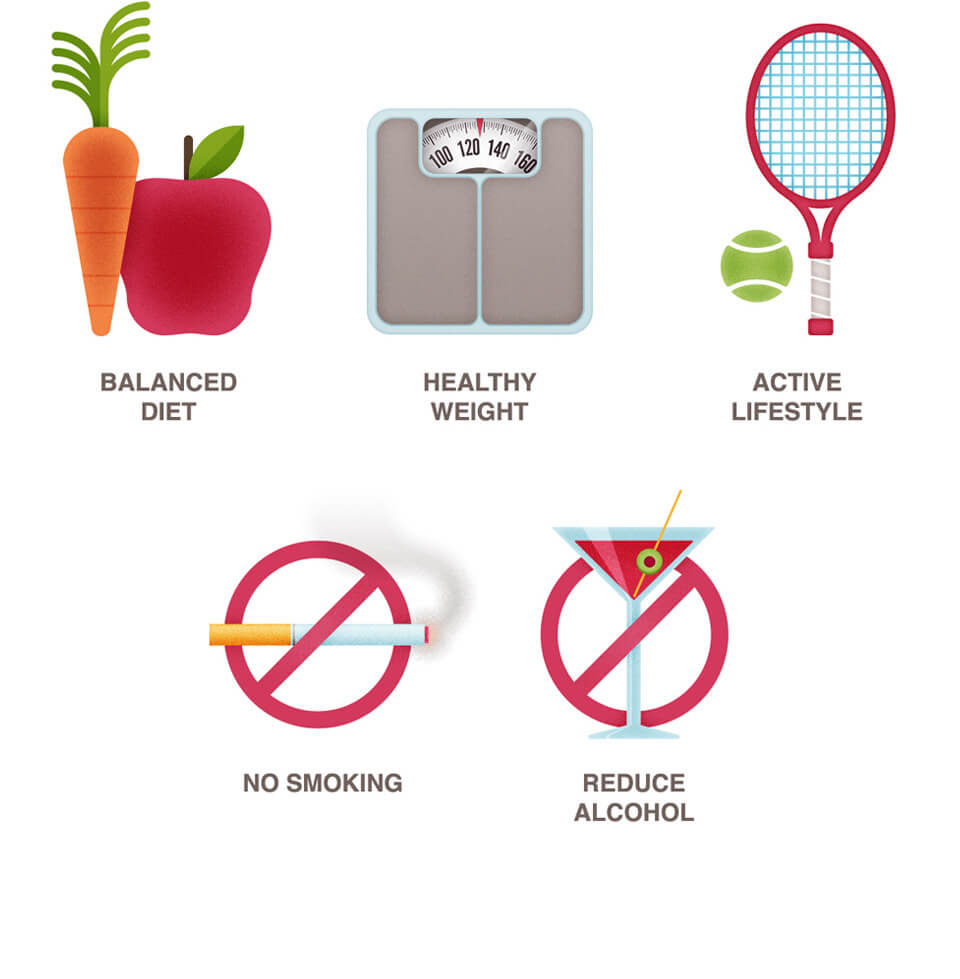
  • Eat fruits and vegetables: Eating 3.5 to 5 cups of fruits and vegetables daily has been shown to reduce the risk of breast cancer. Browse NBCF’s collection of free cookbooks to incorporate healthy eating into your lifestyle.
  • Stay physically active: Studies have shown that women who are physically active have a lower risk of breast cancer than inactive women. Try to move your body at least 20 minutes every day to reduce your risk of developing breast cancer.
  • Do not smoke: Smoking and even breathing second-hand smoke is a risk factor for developing many types of cancer, including breast cancer. Eliminate smoking and second-hand smoke from your lifestyle to reduce this risk.
  • Limit alcohol consumption: Frequent consumption of alcohol can increase your risk for breast cancer. The more alcohol you consume, the greater your risk.
  • Schedule your screenings: Staying proactive about your health through receiving regular health screenings, such as mammograms, well-woman exams, and other screenings as recommended by your doctor, can help identify health problems in their early stages when they are easier to treat.

The 10 Screenings Women Should Know

Regular screenings can help identify certain health conditions early, when they are easier to treat. Learn what types of screenings women need, when they need them, and what to expect in this free guide.

Get the Free Screenings Guide

Helpful Article Form

Was this article helpful?

Related reading

  • Signs and Symptoms of Breast Cancer
  • Breast Pain
  • Breast Lump
  • Breast Cyst
  • Breast Self-Exam
Signs and Symptoms…
How to Schedule…
National Breast Cancer Foundation Logo
ABOUT BREAST CANCER
  • What Is Breast Cancer?
  • Early Detection
  • Diagnosis
  • Stages
  • Types of Breast Cancer
  • Treatment
  • Breast Cancer Myths
  • Breast Cancer FAQs
  • Free Educational Guides
  • Breast Cancer Resources
FIND SUPPORT
  • National Mammography Program
  • Patient Navigator Program
  • HOPE Kit
  • Metastatic Breast Cancer Retreats
  • Breast Cancer Support Group
  • Breast Health Education
  • Breast Cancer Awareness in the Workplace
  • Breast Cancer Research
  • Wall of Support
GET INVOLVED
  • Breast Cancer Awareness Month
  • Give
  • Fundraise
  • Corporate Partnership
  • Charitable Partner Learning Center
  • Donate Products
  • NBCF Shop
  • Volunteer
  • Manage My Donation
ABOUT NBCF
  • The NBCF Story
  • Our Impact
  • Our Founder
  • Our Corporate Partners
  • People
  • Careers
  • Financial Reports
  • Contact Us
  • Media Inquiries
  • Sitemap
Charity Navigator Four Star v01 white
2025 Great Nonprofits badge v03 WHITE
Candid Seal 2026
Instagram social link Facebook social link YouTube social link Twitter social link podcast social link podcast social link
Want to support our mission with a mail-in donation?
Send to: PO Box 676910, Dallas, TX 75267-6910
  • About Breast Cancer
  • Find Support
  • Get Involved
  • Donate
  • Contact Us
©2026 National Breast Cancer Foundation, Inc. is a non-profit organization with a 501(c)(3) tax-exempt status. Tax ID Number: 75-2391148. All rights reserved. Site by GLIDE.