


Breast Pain


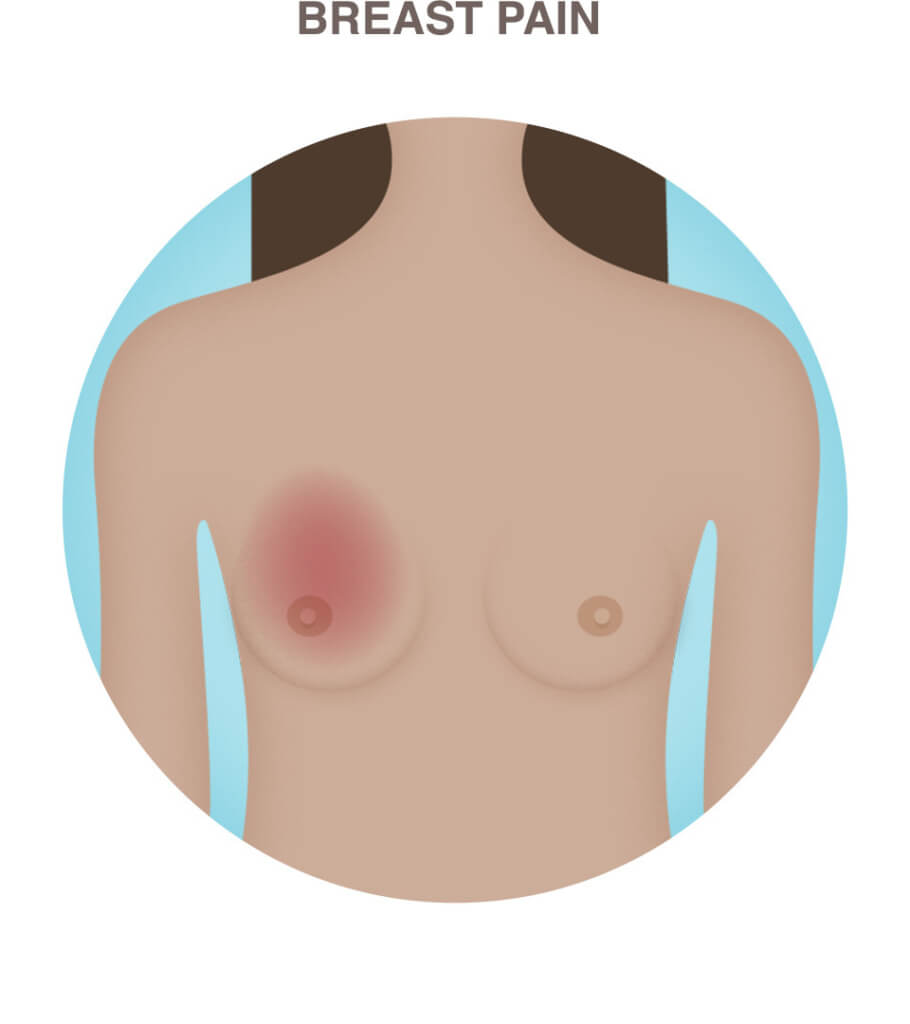
Breast pain is any discomfort, tenderness, or pain in the breast or underarm region, and it may occur for a number of reasons. Breast pain usually isn’t a sign of breast cancer.
Jump to:
Should I be concerned about breast pain?
Breast pain facts
Breast pain symptoms
Common breast pain causes
When is breast pain associated with breast cancer?
Breast pain risk factors
Breast pain in men
Tips to prevent and reduce breast pain
Should I be concerned about breast pain?
Although many women with pain in one or both breasts may be concerned that it is breast cancer, breast pain is not commonly a symptom of cancer. However, all breast changes, including breast pain, should be investigated by a healthcare professional promptly.
Sometimes breast pain is confused with chest pain, which is related to the heart. When someone has chest pain, they need to be seen by a doctor immediately.
3 Steps to Early Detection
Breast cancer can’t usually be prevented, but you can take three important steps to help detect it earlier when it is easiest to treat. Download 3 Steps to Early Detection to increase your chance of finding breast cancer early.
Get the Free GuideBreast pain facts
- Breast pain (mastalgia) is common, with up to 70% of women experiencing breast pain at some point in their lives.
- There are two main types of breast pain: cyclic (related to a woman’s menstrual cycle) and noncyclic (unrelated to a woman’s menstrual cycle).
- Breast pain is more common in premenopausal women due to hormone fluctuations experienced during the menstrual cycle.
- About 50-65% of men will experience breast pain at some point in their lives.
Cyclic breast pain
Cyclic breast pain is pain or soreness in the breast tissue caused by natural hormone fluctuations during a woman’s menstrual cycle. This type of breast pain usually occurs in a predictable pattern, beginning about one week before your period starts and going away after your period begins.
Cyclic breast pain is most common in premenopausal women (women who have not yet experienced menopause) between the ages of 20 and 50. It is also common in women who take hormonal birth control medications. Cyclic breast pain usually stops after menopause and the cessation of menstrual periods.
Noncyclic breast bain
Noncyclic breast pain is pain or soreness in the breasts that has nothing to do with a woman’s menstrual cycle or hormonal fluctuations. Noncyclic breast pain tends to be caused by a breast injury, breast size, or other benign (noncancerous) breast condition, and is more common in women over 40. Noncyclic breast pain, while uncomfortable, is usually considered normal and may not be a sign or symptom of breast cancer.
Understanding Breast Pain
If you’re not aware of your breast health, important changes in your breasts can be easy to miss. Download our free eBook, Breast Problems That Aren’t Breast Cancer, to learn about the most common non-cancerous breast problems, like breast pain, you should know about.
Get the free eBookBreast pain symptoms
Breast pain symptoms will differ between the two types of breast pain: cyclic and noncyclic.
Cyclic breast pain symptoms may include:
- Breasts that feel tender or sore
- Breasts that feel heavier or fuller than normal
Cyclic breast pain typically affects both breasts. It does not usually include pain that feels sharp, stabbing, burning, or stinging.
Noncyclic breast pain symptoms may include
- Pain in one area of only one breast
- Sharp, or acute pain, particularly in one specific area of the breast, that may be described as:
- Shooting
- Stabbing
- Darting
- Radiating
- Stinging
- Burning
- Aching
- Pricking
- Itching
- Dull
- Deep
- Throbbing
- Tightness
While not all breast pain is an indication or symptom of breast cancer, breast pain should be evaluated by your doctor promptly.
Common breast pain causes
There are numerous causes for breast pain and tenderness, many of which are not related to breast cancer.
Hormonal breast pain
Hormonal breast pain, often referred to as cyclic breast pain, is related to a woman’s menstrual cycle and the natural hormone fluctuations it causes. Hormonal breast pain may be caused by any of the following:
- Puberty
- Menstruation and premenstrual syndrome (PMS)
- Pregnancy, more often during the first trimester
- Perimenopause (the years before a woman reaches menopause, during which hormone fluctuations may become unpredictable)
- Menopause (the cessation of periods due to the drop of estrogen in the body, usually around the age of 50)
Fibrocystic breast tissue
Some women have lumpy breast tissue called fibrocystic breasts, which may be more painful during certain times of the month. Fibrocystic breasts are not necessarily linked to breast cancer, and the lumps are fluid-filled cysts rather than a mass of cells. Fibrocystic breast changes are a common cause of breast pain. Fibrocystic breast tissue contains lumps that tend to be more tender just before your menstrual period.
Medications
Certain medications have a side effect of breast pain. Medications known to trigger breast pain include:
- Digitalis preparations (digoxin, digitoxin)
- Methyldopa (Aldomet)
- Certain diuretics (water pills)
- Spironolactone (Aldactone, Aldactazide)
- Eplerenone (Inspra)
- Hydrochlorothiazide
- Oxymetholone (Anadrol, Anapolon)
- Chlorpromazine (Thorazine) and other antipsychotic medications
- Oral contraceptives (birth control pills)
- Estrogen/hormone replacement therapy
- Selective serotonin reuptake inhibitors (SSRIs)
If you are experiencing breast pain, be sure to share the names of all medications you are taking with your doctor.
Breast trauma or injury
Sometimes, breast pain can be caused by an injury or trauma to the breast. Examples of ways breast trauma can happen include:
- Car accident, including seatbelt or airbag injury
- Being hit in the chest or falling down
- Physical activity or strain, such as from exercise, working out, or sports
- Muscle strain (pulled muscles) in the chest wall
- Medical or surgical procedures, such as a breast biopsy or breast surgery
- Rib injury with pain radiating (spreading) to the breast area
If you have received trauma or injury to the chest or breast area that is not the result of normal muscle strain from a physical activity, see your doctor for evaluation right away.
Other health conditions that can cause breast pain
Other conditions not related to hormones, medication side effects, and injuries can lead to breast pain. Other health conditions may include:
- Costochondritis (benign inflammation in the ribs and sternum)
- Breast cysts
- Breast lumps
- Breast infections, such as mastitis (an infection caused by a milk duct that is not properly draining) or a breast abscess (an infection similar to a boil)
- Childbirth and breastfeeding, especially in the days following birth as milk comes in
- Gallstones
- Angina (chest pain or discomfort due to coronary artery disease)
- Autoimmune diseases, such as rheumatoid arthritis
- Stress and anxiety
- Shingles (a re-emergence of chicken pox)
Be sure to speak with your doctor about all breast or chest pain you may be experiencing to help determine the cause and next steps.
Other breast pain causes
- Complications from breast implants
- Scar tissue formation from previous breast surgery or injury
- Poorly fitting or unsupportive bra
When is breast pain associated with breast cancer?
Breast pain is usually present to some degree with inflammatory breast cancer (IBC), which has other distinct symptoms as well. In rare cases, a breast tumor may cause pain, but generally, cancerous tumors are not reported as painful.
What should I do if I am experiencing breast pain?
If you experience breast pain, you should contact your physician. In addition to breast pain, also contact your physician if you experience any of the following:
- Discharge from the nipple, particularly if bloody or clear
- A new lump with or without pain
- A lump does not go away after your menstrual period
- Signs of a breast infection, including redness, pus, or fever
- Redness of the skin of the breast that may appear as a rash, with dilated pores and possibly skin thickening
Breast pain risk factors
Certain factors may increase your risk of experiencing breast pain, including:
- Breast size: Larger breast size tends to cause more breast and back pain than smaller breasts
- Breast surgery: Past breast surgery can cause pain due to nerve injury, scar tissue formation, or topical surgical scar pain
- Fatty acid imbalance: A lack of omega-3 or an excess of omega-6 in the body can lead to breast tissue sensitivity or pain
- Excessive caffeine intake: Consuming more than 31 grams of caffeine per day increases the risk of breast pain (though it does not increase the risk for breast cancer)
Breast pain in men
All humans have breast tissue, and men can also experience breast pain. In fact, breast pain in men is common, with 50-65% of men experiencing breast pain at some point in their lives.
The most common cause of breast pain in men is gynecomastia, an increase in the amount of breast gland tissue, caused by an imbalance of estrogen and testosterone. Breast pain in men often presents as tenderness, sensitivity, or aching in the breast tissue.
Like breast pain in women, male breast pain is not usually an indication of breast cancer. However, male breast cancer can occur with pain, usually caused by a cancerous lump in the breast tissue or behind the nipple.
All male breast pain should be reported to a physician right away for evaluation.
Tips to prevent and reduce breast pain
Not all breast pain can be prevented, especially pain caused by hormones. However, certain lifestyle changes or pain-reducing techniques may help with breast pain, including:
- If you are taking hormonal therapy and experiencing breast pain that affects your quality of life, talk with your doctor about switching the therapy
- Avoid or switch medications that can cause breast pain; speak with your doctor before discontinuing or changing any medications
- Wearing a properly fitted bra can help reduce breast pain
- Relaxation therapy, such as yoga or meditation, can help reduce pain, including breast pain
- Limit or eliminate caffeine consumption
- Avoid excessive or prolonged lifting activities
- Follow a low-fat diet
- Reduce salt intake
- Avoid smoking
- Use heat or ice on the breast
- Talk with your doctor about which over-the-counter pain relievers may work for you
Sources:
Cleveland Clinic
Johns Hopkins
Mayo Clinic