


Breast Cancer in Young Women


Breast cancer is primarily seen as a disease that affects older women. While the vast majority of diagnoses do occur later in life, with 62 as the median age at the time of diagnosis, younger women under the age of 45 are also affected, and their numbers are slowly increasing.
Understanding the realities of early-onset breast cancer is key to ensuring younger women are not overlooked.
Jump to:
How common is breast cancer in young women?
What is different about breast cancer in young women?
Risk factors for breast cancer in young women
Early signs of breast cancer in women
Tests to detect breast cancer in young women
Common types of breast cancer in young women
How is breast cancer in young women treated?
Breast cancer in young women prognosis
Breast cancer screening in young women
Raising awareness of breast cancer in young women
How common is breast cancer in young women?
Breast cancer can develop at any age and, though relatively uncommon, breast cancer in young women is not rare. About 10% of all new cases of breast cancer in the United States are in women younger than 45 years old, and breast cancer affects approximately 4-6% of women under the age of 40.
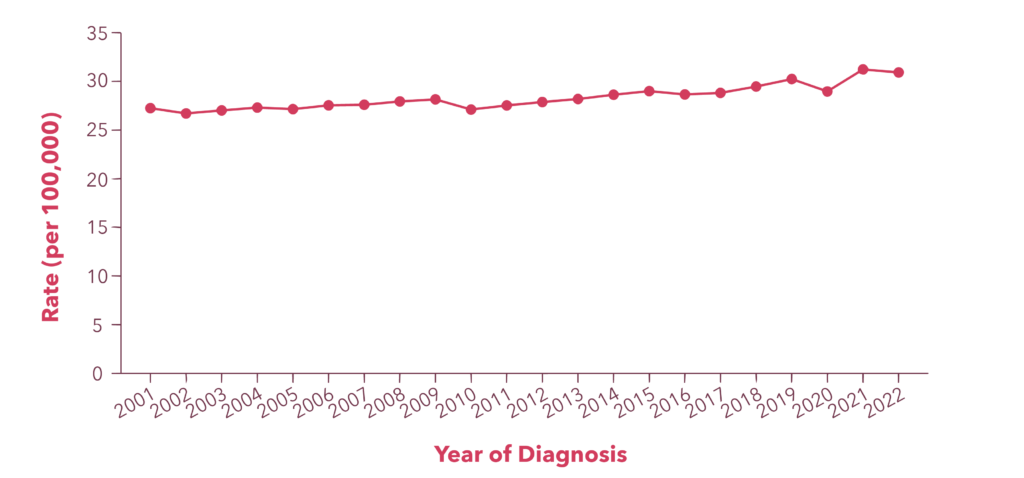
In the last several years, breast cancer incidence rates among younger women have increased. CDC data show that among women younger than 45, the incidence increased by an average of 0.7% per year from 2001 to 2022 and accelerated to 1.1% per year from 2012 to 2022. Recent data from the American Cancer Society describe an even greater increase, showing breast cancer incidence among women younger than 50 has been increasing by approximately 1.4% per year in the last decade, versus a 0.7% increase in women over 50 during the same time period.
Trends in breast cancer incidence rates among U.S. women under age 45, 2001-2022
Similar to breast cancer in older women, the exact cause of breast cancer in younger women is not known. However, certain lifestyle and environmental factors could be at play. Experts suggest that women who delay or forego childbirth may face an increased risk of developing breast cancer. This may be because having fewer children or having children later in life increases lifetime exposure to estrogen, which is the driver for most breast cancers. Other factors like obesity, decreased physical activity, alcohol consumption, and reduced breastfeeding may also contribute to increased risk.
Younger populations also still face traditional risk factors of women of all ages, such as genetic mutations and family history of the disease. Read more about the risk factors for breast cancer in women of all ages.
What is different about breast cancer in young women?
Breast cancer in women under the age of 45 isn’t typically “the same disease happening earlier.” It often behaves differently, is detected differently, and can affect life in unique ways.
More aggressive and advanced types
Like older women, young women are most often diagnosed with invasive breast cancers. However, studies have shown that women under 45 tend to develop more aggressive and fast-growing types of invasive breast cancers, such as triple-negative breast cancer, at higher rates than older women.
Studies also show that women under 45 tend to be diagnosed at more advanced stages than older women. This may be due to younger women dismissing breast cancer signs or symptoms, thus delaying diagnosis, or because they are under the typical age to begin screening mammograms, which is 40 years old.
Young women may also face a higher rate of breast cancer recurrence than women diagnosed later in life. Among other factors, this may be because when a woman is diagnosed and successfully treated at a young age, she has many more years of her natural lifespan to live, meaning there is more time for the cancer to come back.
Learn more about breast cancer recurrence in the free eBook, What You Need to Know About Breast Cancer Recurrence.
Risk factors for breast cancer in young women
There is no guaranteed way to prevent breast cancer or predict who will develop it. However, we do know that certain genetic, hormonal, lifestyle, and environmental factors can increase the risk of breast cancer in younger women.
Genetic risk factors
One of the strongest known risk factors is inherited gene mutations. Mutations in the BRCA1 and BRCA2 genes significantly increase the risk of developing breast and ovarian cancer at a younger age. Women with these mutations are also more likely to develop aggressive breast cancers, such as triple-negative breast cancer. There are other inherited gene mutations linked to breast cancer risk as well, with more gene mutations being discovered every few years.
While a BRCA1 or BRCA2 gene mutation may increase someone’s odds of developing breast cancer, only a very small portion of the general population—an estimated 0.25%, or about 1 in 400 people—carries a mutated BRCA gene. Approximately 10-12% of women diagnosed with breast cancer have a genetic mutation.
A person may be considered high risk for a BRCA gene mutation if they have a family history of:
- A parent (mother or father) with a known BRCA gene mutation
- Breast cancer diagnosed before age 50
- Male breast cancer at any age
- Multiple relatives on the same side of the family with breast cancer or ovarian cancer, especially a first-degree relative (mother, father, sister, or daughter)
- Multiple breast cancers in the same relative (breast cancer developing in both breasts over time or at the same time)
- Both breast and ovarian cancer in the same relative
- Ashkenazi Jewish heritage
- A significant history on the same side of the family (mother’s or father’s side) of men diagnosed with prostate cancer at a young age, ovarian cancer in female family members, melanoma, or pancreatic cancer
Those with known risks for an inherited genetic mutation, such as those listed above, may choose to undergo genetic testing to see if there is a genetic link to their breast cancer risk.
Other risk factors
While genetics plays a major role for some women, many younger women diagnosed with breast cancer have no known inherited mutation or obvious risk factor.
Additional breast cancer risk factors in young women include:
- Family history of breast or ovarian cancer, especially in a first-degree relative
- Dense breast tissue
- Ashkenazi Jewish heritage
- Prior radiation treatment to the chest
- Obesity or excess weight gain during adulthood
- Poor diet
- Alcohol consumption
- Lack of physical activity or a sedentary lifestyle
- Smoking
- Hormonal and reproductive factors, including:
- Starting menstruation at an early age (before age 12)
- Going through menopause later in life (after age 55)
- Never being pregnant or having a first pregnancy later in life
- Not breastfeeding
- Long-term use (exceeding 6 months) of certain hormone replacement therapies (HRT); not to be confused with hormonal therapy used to treat breast cancer
Women under 40 who have breast cancer risk factors should talk with their doctor about whether earlier mammograms or additional screenings, such as breast MRI or ultrasound, may be recommended.
Although breast cancer cannot usually be prevented, women may be able to lower their risk by:
- Maintaining a healthy weight
- Exercising regularly
- Limiting alcohol intake
- Avoiding smoking
- Breastfeeding, when possible
- Discussing family history and genetic testing with a healthcare provider
Early signs of breast cancer in women
Breast cancer symptoms in young women are often similar to those seen in older women, but they can sometimes be overlooked because many younger women do not expect to develop breast cancer. Symptoms may also be mistaken for hormonal changes, menstrual cycle fluctuations, pregnancy-related changes, or benign breast conditions.
The most common breast cancer symptoms in young women include:
- A new breast lump or thickening
- Swelling in part or all of the breast
- Persistent focal (localized) pain in one area of the breast
- Skin changes, such as dimpling, redness, scaliness, or puckering
- Nipple discharge, especially if clear or bloody, or occurring without squeezing
- A nipple turning inward (inversion)
- Swollen lymph nodes under the arm or near the collarbone
Many breast lumps in women in their 20s and 30s are not cancerous, and younger women are more likely to have dense breast tissue (less fatty with more fibroglandular tissue) and benign breast conditions such as cysts or fibroadenomas. However, any change in the breasts, especially if persistent, should be evaluated by a healthcare provider.
Inflammatory breast cancer in younger women
Inflammatory breast cancer (IBC) is a rare but aggressive form of breast cancer that tends to occur more often in younger women (under 40) and in Black women. It also has its own distinct signs and symptoms.
In addition to other symptoms listed above, inflammatory breast cancer symptoms may also include:
- Areas of skin discoloration that are pink, red, or purple, which typically cover more than one-third of the breast
- A persistent rash that looks like an insect bite or a bruise
- Swelling or firmness, typically in one breast
- Persistent itching, pain, and/or burning; one breast may feel warmer than the other
- Skin may appear pitted like an orange peel
If you experience any of these symptoms, contact your doctor right away.
Breast Cancer Signs & Symptoms Guide
Learn more about the signs and symptoms of breast cancer—and what to do if you have symptoms—in the free Breast Cancer Signs & Symptoms Guide.
Get the Free GuideTests to detect breast cancer in young women
Detecting breast cancer in younger women can be more challenging because younger women often have dense breast tissue, which can make abnormalities harder to see on mammograms. Additionally, screening mammograms are not typically recommended for women under 40 who do not have risk factors or symptoms, often leading to later diagnoses.
If a young woman is showing signs and symptoms of breast cancer, the following tests may be recommended to assist with diagnosis:
- Diagnostic mammogram: A specialized mammogram used when breast cancer signs or symptoms are present
- Breast ultrasound: Uses sound waves to create an image of the breast tissue; can better evaluate dense breast tissue
- Breast MRI: Uses magnetic energy and radio waves to create a detailed picture of areas within the breast
- Breast biopsy: The only way to definitively diagnose breast cancer, a biopsy removes a small sample of tissue or fluid from the breast that is then studied under a microscope to check for the presence of cancer
Common types of breast cancer in young women
Breast cancers in young women are often diagnosed at later stages because routine mammograms typically begin at age 40, and because dense breast tissue can make tumors harder to detect.
The most common type of breast cancer in all women, including young women, is invasive ductal carcinoma (IDC), which makes up about 80% of all breast cancer diagnoses. However, younger women tend to be diagnosed with more aggressive and faster-growing types of invasive breast cancers than older women.
These aggressive types may include:
Triple-negative breast cancer (TNBC)
Triple-negative breast cancer (TNBC) is an aggressive form of breast cancer found more frequently in women under 40 than in older women. In triple-negative breast cancer, the three most common receptors known to fuel breast cancer growth—estrogen (ER), progesterone (PR), and the HER2 receptor—are not present in the cancerous tumor, making it harder to treat with fewer treatment options available.
Inflammatory breast cancer (IBC)
Inflammatory breast cancer (IBC) is a rare but aggressive form of breast cancer where cancer cells infiltrate the skin and lymph vessels of the breast. Because symptoms can resemble a breast infection or rash, diagnosis is sometimes delayed. IBC is harder to diagnose than other types of breast cancer, spreads more quickly than other types, and tends to occur in younger women.
Metastatic breast cancer (MBC)
Metastatic breast cancer (MBC) occurs when breast cancer spreads beyond the breast and nearby lymph nodes to other parts of the body, such as the bones, liver, lungs, or brain. Also called Stage 4 breast cancer, MBC is advanced cancer for which treatment focuses on quality of life rather than becoming cancer-free.
According to the National Cancer Institute, 20-30% of women diagnosed with early-stage breast cancer eventually develop metastatic breast cancer. This is called a metastatic or distant recurrence, where MBC may develop months, years, or even decades after someone has completed treatment for breast cancer. Because women who are diagnosed with early-stage or even locally advanced breast cancer at a young age have a longer portion of their natural lifespan to live than women diagnosed at older ages, their risk for developing metastatic disease at some point is increased.
Additionally, about 5-6% of women newly diagnosed with breast cancer have de novo metastatic disease, meaning that the breast cancer was already advanced Stage 4 when it was first detected.
How is breast cancer in young women treated?
Breast cancer in young women treatment depends on several factors, including:
- Cancer stage: The stage describes how far the cancer has spread in the body. Early-stage breast cancer may be treated with surgery followed by radiation, hormonal therapy, chemotherapy, or targeted therapy. More advanced or metastatic breast cancer often requires systemic treatments that travel throughout the body, such as chemotherapy, immunotherapy, hormone therapy, or targeted therapies.
- Tumor subtype: Breast cancers are classified into subtypes based on the proteins or receptors found on cancer cells. Common subtypes include hormone receptor-positive (HR+), HER2-positive (HER2+), and triple-negative breast cancer. Some subtypes grow more slowly and respond well to treatment, while others are more aggressive and may not respond as well to certain treatments.
- Hormone receptor status: Some breast cancers are fueled by the hormones estrogen or progesterone. These are called hormone receptor-positive (HR+) cancers. If a tumor is hormone receptor-positive, treatment may include hormone-blocking therapies.
- HER2 status: HER2-positive breast cancers produce excess HER2 protein, which can cause cancer cells to grow more quickly. These cancers are often more aggressive but may respond well to HER2-targeted therapies that specifically attack HER2-positive cancer cells.
- Overall health: A woman’s age, general health, menopausal status, and other medical conditions can affect treatment recommendations and the body’s ability to tolerate certain therapies. Doctors consider factors such as heart health, immune function, and existing health conditions when creating a treatment plan.
- Fertility goals: Some breast cancer treatments can affect fertility temporarily or permanently. Because many younger women have not yet started or completed their families, fertility preservation is often an important part of treatment planning. Women may choose to discuss options such as egg freezing, embryo freezing, or ovarian suppression with a fertility specialist before treatment begins.
Treatment options for young women with breast cancer may include:
- Surgery: Lumpectomy or mastectomy, with or without breast reconstruction, is a common option to treat breast cancer surgically.
- Chemotherapy: A systemic therapy, chemotherapy travels throughout the entire body, targeting all cells, not only cancer cells.
- Radiation: A local therapy, radiation targets one area of the body, using high-energy rays to kill cancer cells in that area.
- Hormonal therapy: Certain drugs, called hormonal therapy, can help starve breast cancer cells by cutting off their supply of hormones.
- Targeted therapy: Biologic targeted therapy uses drugs to block the growth of breast cancer cells in specific ways.
- Immunotherapy: This newer form of treatment uses the patient’s immune system to fight the cancer.
Many breast cancer treatment options cause side effects that may be unpleasant, such as hair loss, fatigue, nausea, and more. Read more about breast cancer treatment side effects and how to manage them.
Breast cancer in young women prognosis
Each individual’s breast cancer prognosis (the likely future course and outcome of the disease) is highly variable and dependent on many factors, including stage at diagnosis, type of breast cancer, hormone receptor status, response to treatment, and more.
Younger women are more likely to develop aggressive breast cancers or be diagnosed at a later stage, which can adversely affect their prognosis. However, advances in treatments, targeted therapies, earlier detection, and increased awareness continue to improve outcomes for young women diagnosed with breast cancer.
Breast cancer screening in young women
Routine mammograms are generally recommended beginning at age 40 for women at average risk of breast cancer. However, women under 40 with elevated risk factors may need to begin screening earlier or receive different types of screening. For example, a woman with a first-degree relative (mother, sister, or daughter) with breast cancer may need to begin screening 10 years before their relative’s age at diagnosis. This means that if one’s mother was diagnosed with breast cancer at age 45, her daughter may need to begin breast cancer screening at age 35.
For women without symptoms but with elevated risk, doctors may recommend a combination of:
- Clinical breast exams
- Screening mammograms
- Breast ultrasound (often used alongside mammography in younger women because it can better evaluate dense breast tissue)
- Breast MRI (may be recommended for women at very high risk, including those with BRCA1 or BRCA2 gene mutations)
- Genetic testing and counseling
Women should discuss personal risk factors and screening recommendations with their healthcare provider to determine the best screening plan for their age and risk level.
Advocating for young women facing breast cancer
Young women with breast cancer symptoms are often told they’re “too young” for it to be serious. But you know your body better than anyone else. If something looks or feels different, it’s important to speak up and keep asking questions until you feel heard.
If you notice any breast cancer signs or symptoms, such as a new lump, breast swelling, skin changes, nipple discharge, persistent pain, or unexplained changes in breast shape or size, inform your doctor right away.
You can say things like:
- “This change is new for me, and I want it fully evaluated.”
- “I understand I’m younger than the typical screening age, but I’m concerned about these symptoms.”
- “Can we discuss diagnostic imaging, such as a mammogram or ultrasound?”
While routine screening mammograms are generally recommended beginning at age 40 for women at average risk of breast cancer, younger women with symptoms or elevated risk factors may still qualify for diagnostic imaging. Insurance coverage can vary depending on your age, symptoms, provider recommendations, and plan details, so it’s important to check with your insurance company and healthcare provider about coverage and next steps.
If you need help affording a mammogram, regardless of your age or situation, you can search for an NBCF National Mammography Program partner facility near you that may provide a free or low-cost screening. Read more about overcoming barriers to receiving a timely screening in How to Schedule a Mammogram.
Most importantly, trust yourself. Early detection matters, and advocating for your health is never overreacting.
Raising awareness of breast cancer in young women
Raising awareness about breast cancer in young women is important because many younger women do not realize they can develop the disease. Increased awareness can encourage women to recognize symptoms earlier, understand their personal risk factors, and seek medical evaluation sooner.
Awareness efforts you can participate in include:
- Sharing educational resources and promoting breast health education
- Hosting or participating in community awareness events
- Supporting Breast Cancer Awareness Month campaigns
- Encouraging conversations about breast health, family history, and screening with your loved ones